
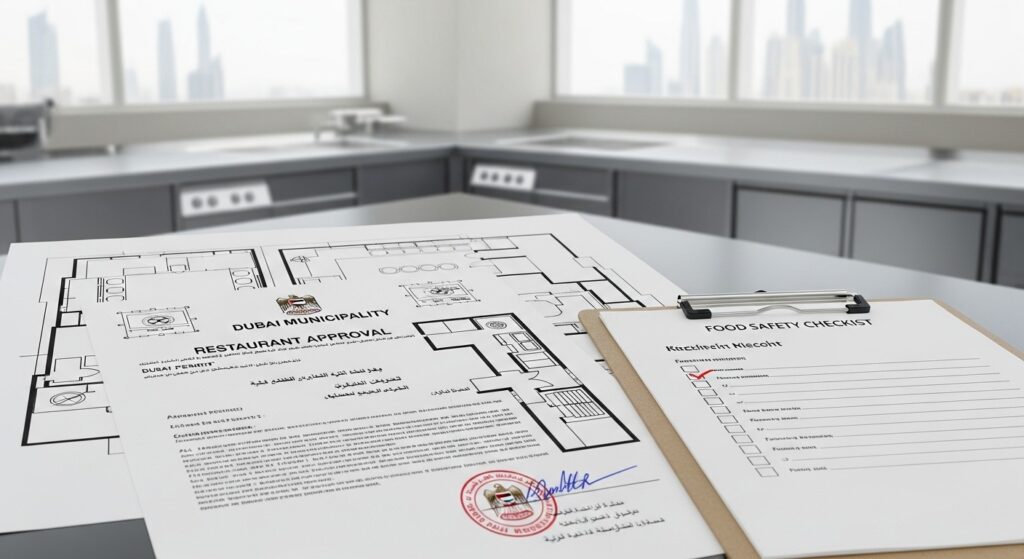
Dubai Municipality Approval for Restaurants
Opening a restaurant in Dubai takes more than a good location and a strong menu. Before any food is served or equipment is installed, Dubai Municipality approval is required. This approval is not a formality. It is a detailed review process that focuses on public health, safety, and compliance.
Many restaurant projects are delayed because approval requirements are not understood early enough. Kitchen layouts are designed without considering food flow, ventilation systems are undersized, or key details are missing from drawings. These issues are common, but they are avoidable.
This blog explains the full DM approval process for restaurants, what is reviewed, what documents and drawings are required, how long it usually takes, and why delays happen.
Why restaurants need Dubai Municipality approval
Restaurants are regulated more strictly than many other commercial activities. This is because food preparation directly affects public health. Poor kitchen design, bad ventilation, or incorrect waste handling can create serious risks.
Dubai Municipality approval exists to make sure restaurants meet clear standards before they are allowed to operate.
Approval confirms that:
- Food preparation areas are hygienic
- Kitchen layouts follow safe food handling practices
- Ventilation systems remove heat, smoke, and odors properly
- waste and grease are managed safely
- Staff hygiene facilities are provided
Without approval, a restaurant cannot legally open or operate in Dubai. If work starts without approval, it can be stopped, fined, or required to be changed later.
Types of restaurants that require Dubai Municipality approval
Almost all food-related businesses in Dubai require Dubai Municipality approval. This includes both new restaurants and changes to existing ones.
Approval is required for:
- dine-in restaurants
- cafes and coffee shops
- fast food outlets
- cloud kitchens
- bakeries and confectioneries
- food court units
- takeaway and delivery kitchens
Even small changes, such as modifying the kitchen layout, adding new equipment, or changing the type of food served, often require new approval or revision.
A common mistake is assuming approval is only needed for large restaurants. In reality, size does not remove the requirement.
What Dubai Municipality check during restaurant approval
Dubai Municipality reviews restaurant submissions in detail. The focus is not on decoration or branding, but on how the restaurant functions behind the scenes.
Kitchen layout and workflow
The kitchen must be designed to support safe food handling. Dubai Municipality checks how food moves through the space, from storage to preparation to cooking and serving. Raw and cooked food areas must be clearly separated to avoid contamination.
Food preparation and washing areas
Separate zones are required for:
- food preparation
- utensil washing
- equipment cleaning
Handwash stations must be placed correctly and shown clearly in drawings.
Ventilation and exhaust systems
Ventilation is one of the most common causes of rejection. Dubai Municipality checks:
- exhaust hood size and position
- air flow capacity
- routing of ducts
- odor control
Ventilation must be strong enough for the type of cooking planned.
Grease trap and drainage
Grease traps must be sized and located correctly. Drainage layouts must show how wastewater and grease are handled safely.
Waste storage and disposal
Waste areas must be clearly identified. Dubai Municipality checks how waste is stored, separated, and removed without affecting food areas.
Staff hygiene facilities
Staff toilets, changing areas, and handwash facilities must meet hygiene rules. Missing or poorly placed facilities often lead to comments.
If any of these elements are unclear or missing from the drawings, approval will be delayed.
Step-by-step restaurant approval process
While details can vary depending on the project, the general process follows a clear path.
Step 1: Define the restaurant activity and scope
The first step is to define exactly what type of restaurant is planned. This includes:
- cuisine type
- cooking methods
- seating capacity
- kitchen size
- whether it is dine-in, takeaway, or delivery
This information affects layout, ventilation, and approval requirements. An unclear scope causes problems later.
Step 2: Appoint a licensed engineering consultant
Dubai Municipality restaurant approvals must be submitted by a licensed engineering consultant. The consultant prepares drawings, submits the application, and responds to authority comments.
Trying to submit without proper technical support usually leads to rejection.
Step 3: Prepare required drawings
The consultant prepares detailed drawings based on Dubai Municipality standards. These usually include:
- full kitchen layout
- equipment placement
- food preparation flow
- ventilation and exhaust routing
- plumbing and drainage layouts
- grease trap details
- waste management areas
Drawings must match the actual site conditions. Any mismatch can stop approval.
Step 4: Online submission to Dubai Municipality
The application is submitted through the official Dubai Municipality system along with all required documents and drawings.
At this stage, accuracy matters. Incomplete submissions almost always receive comments.
Step 5: Authority review and comments
Dubai Municipality reviews the submission. They may:
- Approve it, and directly
- issue comments requesting changes
- Reject the submission if major issues exist
Comments are common and should be expected.
Step 6: Revisions and resubmission
If comments are issued, drawings are revised to address them. The revised submission is then resubmitted for review.
Clear and accurate responses speed up this step.
Step 7: Approval issuance
Once all comments are resolved, the Dubai Municipality issues the restaurant approval. Only after this approval is issued should construction or fit-out work begin.
Documents required for restaurant approval
While requirements can vary, most restaurant projects need:
- tenancy contract
- title deed or location plan
- trade license or initial approval
- Consultant Appointment Letter
- landlord NOC (if applicable)
- additional NOCs if required
Missing or expired documents are a common reason for delays.
Common reasons restaurant approvals are delayed
Most restaurant approval delays come from the same issues:
- Incorrect or inefficient kitchen layout
- Ventilation design does not matching cooking equipment
- missing grease trap details
- unclear food preparation flow
- drawings not matching the actual site
- changes made after submission
Designing the restaurant first and checking rules later is one of the biggest causes of delay.
Restaurant approval timeline
Timelines depend on the complexity of the restaurant and the quality of the submission.
In general:
- Restaurant approvals take 20 to 40 working days
Projects with clear drawings and quick responses move faster. Multiple revisions increase timelines.
How to avoid delays in restaurant approvals
Based on real projects, delays are reduced when:
- The restaurant concept is clearly defined early
- Kitchen and ventilation design follow DM rules from the start
- experienced consultants are used
- drawings are complete and accurate
- Authority comments are answered quickly
- layout changes are minimized after submission
Most delays are preventable with proper planning.
Final thoughts
Dubai Municipality approval for restaurants is detailed because it protects public health. While the process can feel complex, it becomes manageable when handled correctly.
Understanding what the Dubai Municipality reviews, preparing accurate drawings, and following the approval steps to help avoid delays, extra costs, and last-minute changes.
If you are planning to open or modify a restaurant in Dubai, treating approval as an early planning step rather than a last task makes a real difference.